Julia
Products
Julia
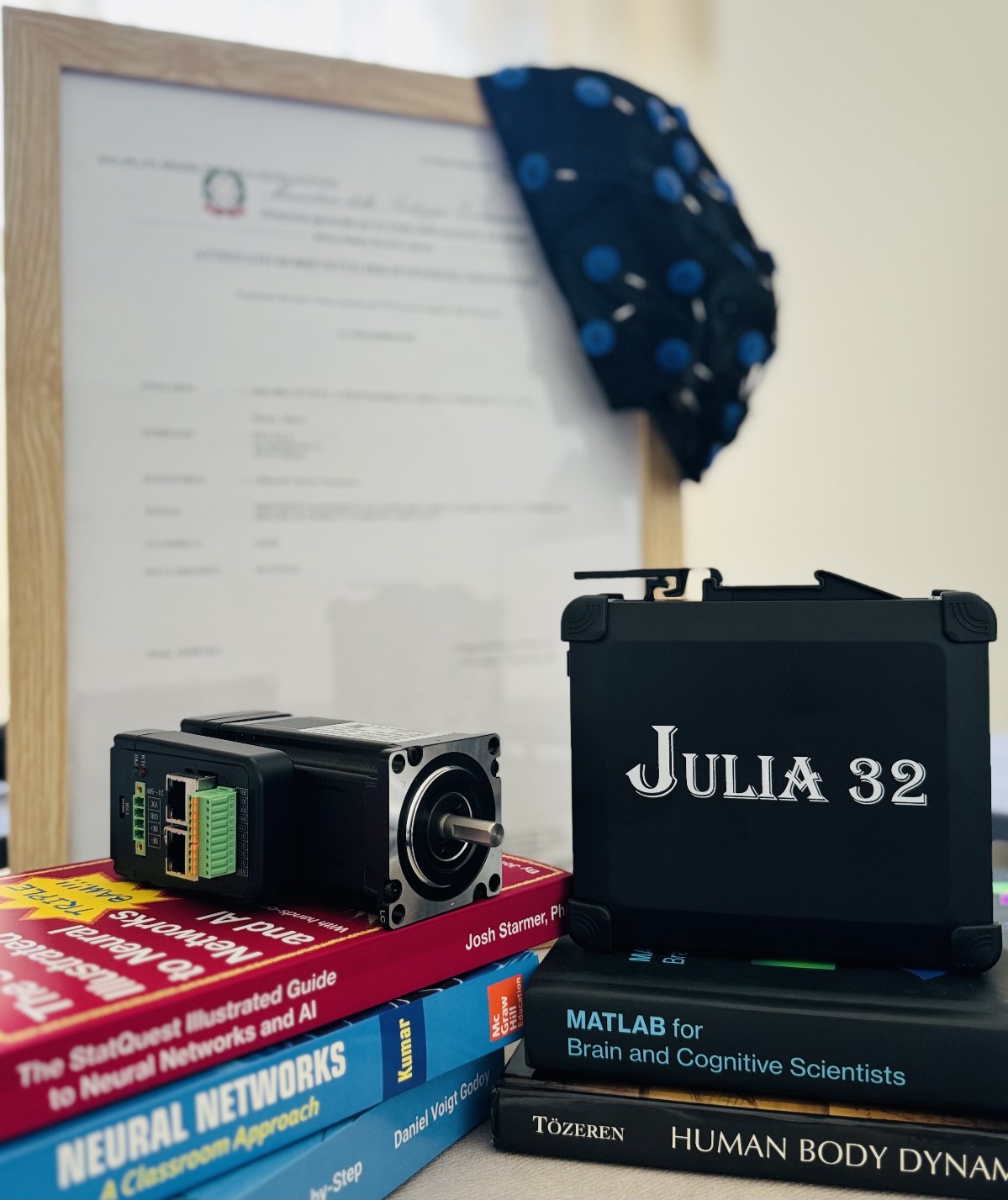
BCFI: The World’s First Patented Brain-Computer Fieldbus Interface
The First BCI with a Native Industrial Fieldbus — Before It Became a Trend
Over the past year, there has been a noticeable increase in academic papers and corporate announcements around “new” approaches to neural–industrial integration. The momentum is encouraging, but context matters.
In 2019, I submitted a patent for the first Brain–Computer Interface with a native industrial fieldbus and real-time modular machine learning. The patent was granted one year later.
Since then, I’ve seen a number of “novel” architectures emerge that closely resemble the system finalized and protected more than five years ago. A number of implementations have begun appearing internationally that closely resemble this architecture, often emerging years after the original reduction to practice, and sometimes within different regulatory and patent jurisdictions. I remain open to technical and research collaborations with industrial partners and academic institutions that are seriously exploring real-time neural–industrial integration.
Why this still matters today:
• Native EtherCAT (realtime Fieldbus) integration — no PC-based bridges; the brain operates as a deterministic node on the industrial bus
• Beyond theory — built, tested, and operational, not just a conceptual or academic exercise
• Direct asset control — real-time, low-latency control of industrial drives, vision systems, and high-speed motion hardware
While much of the current focus is on humanoid robots, the more fundamental shift lies elsewhere:
Why build machines that imitate humans, when we can directly integrate the human into the machine?
The era of the Industrial Cyborg didn’t start today.
It began when BCI stopped being a medical curiosity and became a native industrial interface.
BCI EtherCAT Neurotechnology Industry50 Cyborg MachineLearning
Over the past year, there has been a noticeable increase in academic papers and corporate announcements around “new” approaches to neural–industrial integration. The momentum is encouraging, but context matters.
In 2019, I submitted a patent for the first Brain–Computer Interface with a native industrial fieldbus and real-time modular machine learning. The patent was granted one year later.
Since then, I’ve seen a number of “novel” architectures emerge that closely resemble the system finalized and protected more than five years ago. A number of implementations have begun appearing internationally that closely resemble this architecture, often emerging years after the original reduction to practice, and sometimes within different regulatory and patent jurisdictions. I remain open to technical and research collaborations with industrial partners and academic institutions that are seriously exploring real-time neural–industrial integration.
Why this still matters today:
• Native EtherCAT (realtime Fieldbus) integration — no PC-based bridges; the brain operates as a deterministic node on the industrial bus
• Beyond theory — built, tested, and operational, not just a conceptual or academic exercise
• Direct asset control — real-time, low-latency control of industrial drives, vision systems, and high-speed motion hardware
While much of the current focus is on humanoid robots, the more fundamental shift lies elsewhere:
Why build machines that imitate humans, when we can directly integrate the human into the machine?
The era of the Industrial Cyborg didn’t start today.
It began when BCI stopped being a medical curiosity and became a native industrial interface.
BCI EtherCAT Neurotechnology Industry50 Cyborg MachineLearning
IndustrialAutomation Patent IPProtection FirstMover HrkBrk Julia32
Up to 32 Low-Noise PGAs and 32 High-Resolution Simultaneous-Sampling ADCs
• Input-Referred Noise: 1 μVPP (70-Hz BW)
• Input Bias Current: 300 pA
• Data Rate: 250 SPS to 16 kSPS
• CMRR: –110 dB
• Programmable Gain: 1, 2, 4, 6, 8, 12, or 24
• Unipolar or Bipolar Supplies:
– Analog: 4.75 V to 5.25 V
– Digital: 1.8 V to 3.6 V
• Built-In Bias Drive Amplifier, Lead-Off Detection, Test Signals
• Built-In Oscillator
• Internal or External Reference
• Flexible Power-Down, Standby Mode
• Operating Temperature Range: –40°C to +85°C
Compatible with industry standards and leading fieldbus technologies such as:
- EtherCAT
- Profinet
- EtherNetIP
- Sercos III
- PowerLink
- RT-Ethernet, MQTT, OPC UA
- Varan
- CC-Link
Below there is a presentation related the potential applications